Railway2026-10-22 06:52:19Railway says customer environment variables may have been accessed, urges all users to rotate keysCloud deployment platform Railway said it is investigating a security incident that may have exposed customer environment variables, with some contents already decrypted. The company said the impact may be limited to only some users, but it still told everyone to rotate all keys and passwords stored on Railway. That includes API keys and database credentials commonly kept in environment variables for application startup. Railway’s status page showed service disruption starting at 3:24 p.m. UTC+8 on Oct. 21, with builds and deployments fully paused. An update at 5:59 a.m. UTC+8 on Oct. 22 said all deployments, including enterprise plans, had been suspended during the investigation. Enterprise builds resumed at 11:32 a.m., while Pro, Hobby, Free and Trial plans were still waiting to come back as of noon. Railway also said the Redeploy function was temporarily unavailable and told users to use "Deploy Latest Commit" from the service page instead. The company advised users to revoke old keys first, create new ones, update Railway environment variables, and then redeploy because containers only read those values at startup. Railway linked the incident to a recent run of attacks on deployment providers aimed at AI inference vendors, but it did not name other companies or confirm whether recent cases involving Zeabur and OpenCode were carried out by the same actor.410
Vercel2026-10-21 23:00:04Vercel open-sources durable-harness for crash recovery in AI coding agentsVercel has released durable-harness as an open-source package designed to give AI coding agents recovery capabilities when crashes or timeouts interrupt execution. According to Techub News, the package works by wrapping existing coding frameworks, including Pi, OpenCode, Claude Code, and Codex, without requiring changes to those frameworks themselves. Each session is written to a persistent log so work already completed is not lost if a function fails. The tool is aimed at teams moving agents from local environments to the cloud. Its recovery flow records each step in a durable log, storing intent before a model or tool call and saving the result after the call completes. If a function crashes, a queue hands the task to a new function, which reads the log and resumes execution from where the previous run stopped. Results from completed calls can also be read back from the log, which helps avoid duplicate billing. Techub attributed the report to MarkTechPost.420
Railway2026-10-21 22:28:57Railway flags abnormal activity in environment variable system and urges users to rotate keysCloud deployment platform Railway said it detected abnormal activity in the system that stores customer environment variables, according to an official notice cited by ChainCatcher. An initial investigation found that an unauthorized third party may have accessed encrypted environment variables and obtained decrypted contents for some of them. Those variables may include API keys, database credentials and container registry credentials. Railway said it believes the incident is part of a recent wave of attacks targeting platform companies, with the goal of compromising AI inference service providers. The company added that it has notified upstream service providers to proactively revoke keys. For now, Railway has paused all deployments. It is advising all users to immediately rotate environment variables stored on the platform, along with API keys and private repository credentials, and to review relevant service logs.380
Zeabur2026-10-18 15:56:07Zeabur to shut down after two security breaches in two months as former team member details internal strainTaiwan-based AI cloud deployment startup Zeabur said it will wind down operations after suffering two major security incidents within roughly two months, with founder Lin Yuanlin telling users on Oct. 17 that the second breach on Oct. 14 had a wider impact than the first incident in late August. The company plans to begin phasing out services on Dec. 1 and fully shut down dedicated servers and shared clusters on Dec. 31. The shutdown drew added attention because Zeabur had been seen as one of Taiwan’s more visible AI startups. The company, which began as Lin’s graduation project at Zhejiang University, raised a $2 million seed round led by 500 Global at the end of 2025. At that time, it had more than 100,000 registered users, around 5,000 paying users, and had reached the top of Product Hunt’s daily ranking. On the same day as the shutdown notice, former founding marketer Ling Wu published a lengthy retrospective describing deeper internal problems. He said the company laid off about half of its team after the first security incident and had also struggled with U.S. market expansion, product positioning, decision-making, and repeated changes to the business model of its newer product line, Nuphos.510
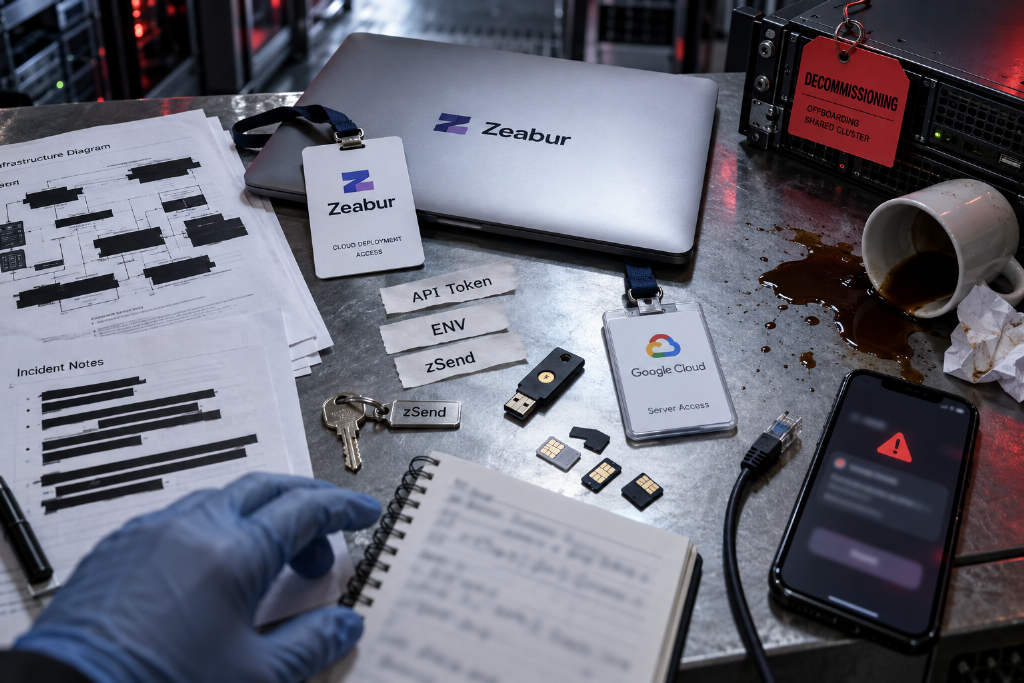
Zeabur2026-10-17 03:36:58Zeabur to wind down operations and shut all servers by Dec. 31 after two security incidentsCloud deployment platform Zeabur is winding down operations, according to a user email sent by founder Lin Yuanlin. The company said some services will begin shutting down from Dec. 1, while all dedicated servers and shared clusters will be taken offline by Dec. 31. Users were advised to back up their data and make migration plans as early as possible. The shutdown decision followed two security incidents this year. Zeabur said it suffered one security event in August and another attack in October. According to the platform’s official status page, attackers gained read access to its database in the latest incident. The exposed scope involved service environment variables, account information and API tokens, while some Google Cloud dedicated servers were also accessed without authorization. Lin said the team had already started discussing whether to continue operating the platform after the August incident. After the second attack, the company reassessed the resources needed to keep running the service and the level of responsibility it could bear, and then chose to shut it down. He also said the past year had been Zeabur’s fastest period of growth, driven by AI apps such as n8n, OpenClaw and Vibe Coding, though AI also lowered deployment barriers and created new limits for growth. The team plans to release Markdown migration guides and Skills for Claude Code and Codex to help users move existing services.620
Zeabur2026-10-16 07:41:08Zeabur hit again within seven weeks as environment variables, API tokens and zSend keys leakCloud deployment startup Zeabur has confirmed a second security incident in less than seven weeks, with the latest breach spreading from a legacy shared cluster to the company’s own operational database and, in some cases, dedicated Google Cloud servers. According to the company’s status page and a user notice cited by the report, the exposed data includes service environment variables, account information, API tokens, and API keys for zSend, Zeabur’s email service. The timeline shifted as the company updated its public disclosures on Oct. 16. An initial notice at 00:08 said unauthorized access was limited to user-managed PostgreSQL and MySQL instances on an old shared cluster and that there was no evidence dedicated servers were affected. At 04:48, Zeabur revised that statement, saying the scope was broader than first reported and confirming the attacker had read access to its database. A later update at 07:33 said large-scale internal credential rotation briefly disrupted some functions, most of which had since recovered. Users have been told to sign in again, rotate all secrets stored in environment variables, regenerate Zeabur API tokens, create new zSend or Zeabur Email keys, and, for Google Cloud dedicated servers, change root passwords and remove unknown SSH keys, especially one labeled "zeabur-pentest."910
Zeabur2026-09-10 01:55:12Zeabur says August security breach exposed database access and some user secretsCloud deployment platform Zeabur has released its full investigation into an August security incident that led to unauthorized access to part of its production database and the reading of some users’ project environment variables. According to the report, the attack began with a vulnerability in a user-deployed NextChat v2.16.1 service running in a Tokyo shared cluster. The intruder then moved through cached routing data containing legacy Zeabur API keys, obtained an administrator key, accessed internal services holding AWS credentials including a long-retained AWS root key, and eventually reached the production database through a maintenance job connected over a private network. Zeabur said the exposed data may have included third-party and AI service API keys, cloud access credentials, database connection details and passwords, GitHub tokens, JWT secrets, and application signing keys. It added that while attackers created new AI Hub access keys, usage and billing logs showed those keys were not used and generated no charges. The company has since disabled Legacy API Key authentication, rotated internal keys and passwords, cut the shared cluster’s path to the production database, added stronger authorization controls and alerts, and advised all users to replace any still-valid credentials that had been stored in environment variables.1960